Showing posts with label Finance. Show all posts
Top Tips for Timely Performance Driving

To that point, you never know when you’re going to need to become a Timely Performance Driver.
Timely Performance is a term that describes being present in the moment when driving so you can maximize your car’s performance and react quickly to surprising situations on the road. Based on a recent survey, 75 percent of U.S. adults say they need to become Timely Performance Drivers at least once a week, and those who reported a need to react quickly to a driving situation say they do so approximately 6 times per week.
BFGoodrich Tires has conducted a survey of driving behaviors. The study group included 1,009 adults (aged 18 years and older) living in the continental United States. The sample was representative of the general population in terms of geographic, demographic, and socioeconomic traits.
Overall, 82 percent of the survey respondents say that drivers often face unexpected situations on the road, and 54 percent agree that drivers drive better in potentially dangerous situations.
Andrew Comrie-Picard, a professional race car driver, X-Games athlete, and BFGoodrich ambassador, emphasizes that drivers of any age can (and should) practice Timely Performance Driving by staying alert so they can push their car to its maximum performance in the moments that matter most.
According to Comrie-Picard, key aspects of Timely Performance Driving include:
*Looking far down the road to anticipate potential issues and road hazards.
*Remembering the importance of smooth contol inputs, such as braking, throttling, and steering.
*Anticipating road conditions, such as standing water and slick roads.
*Driving with two hands on the wheel–no exceptions.
*Keeping distance between you and the car in front of you.
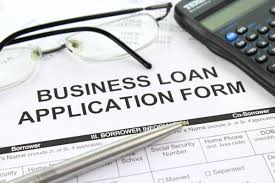
Avoiding Common Business Loan Mistakes
Surveys show that 94.7% of small business owners feel their only lending resources are local banks or personal credit cards. This common sense advice will help you avoid these common business loan mistakes, regardless of your personal credit history... and avoid pledging your personal property as collateral.
First of all, getting approved for a commercial loan is definitely easier than getting personal loans... regardless of your personal credit scores. Additionally, getting the right types of corporate credit is absolutely critical: if you want to protect your personal assets, minimize the risk of a personal lawsuit affecting your business, and to your ability to weather the economic changes that happen overnight.
All business owners must be much more proactive about developing relationships with the right types of lending institutions. You usually want to start your application process with out-of-state, national lenders... not your local or regional banking institutions. National lenders typically won't require a personal guarantee or your social security number.
Follow this simple roadmap to obtain a small business startup loan, a business debt consolidation loan, a bad credit business loan, or a government business loan... although I strongly recommend that you find a commercial loan expert who can help you through the process of building a strong corporate credit rating.
Finding a competent business loan expert will give you a head start on your competition & also let you focus on running your day-to-day activities... instead of dealing with the hassles of establishing a strong business credit rating. An excellent business credit score can help your company's image, overnight. And, finding a small business loan expert isn't that difficult. You just need to know where to look.
Now... let's get started... before you start applying for any business loans!
1. How is your business structured? Is it a sole proprietorship, C-corporation, S-Corporation, Limited-Liability Corporation (LLC), Partnership, or Trust?
2. How long has your business been recognized by your State & Local government?
3. Has your company ever had derogatory information reported against it to either of the two (2) most popular business credit reporting agencies, Dun & Bradstreet or Experian?
4. Are your commercial permits, licenses and registrations current?
5. Does your business have a physical address, or are you trying to use a U.S. Post Office Box instead?
6. Is your business telephone number recognized by directory assistance?
7. Are your incoming telephone calls professionally answered in your business name?
8. Have you established a business checking account?
9. Have you registered & asked for an Employer Identification Number (also known as an EIN) from the IRS?
If your answer to the first question was a sole proprietorship, partnership or trust; I urge you to re-establish your company as a corporation or LLC. I'm not going to provide you with legal advice, but many CPAs and attorneys highly recommend
LLCs (Limited Liability Corporations) as a way of protecting your personal assets & estate... in the event of any lawsuits being filed against your company.
As a sole proprietor, your personal assets are at direct risk of seizure or forfeiture when faced with most types of legal action. Additionally, if you are applying for business loans in a corporation's name... most lending institutions will not require you to provide any personal guarantee!
A corporation can still face difficulties applying for business credit, if it has been in business less than two (2) years or had previous credit problems reported against it. Here are some ways to fix these problems.
- Purchasing a "shelf corporation" or "aged corporation" that's been in good standing with your State government (for longer than 2 years) can drastically improve your chances for small business loan approval.
- You can attempt to repair your business credit rating by writing dispute letters to Experian or Dun & Bradstreet, which isn't always possible.
- Some corporate credit experts will help you find, select & purchase an established "shelf" or "aged" corporation, some of which already have strong credit ratings established... saving you alot of hassles!
I cannot stress this enough... you MUST have a physical address (not a PO Box) if you want to establish a solid business credit rating. The same thing is said for telephone numbers & the way incoming phone calls are handled. Would you lend
money to a company that does not appear to have a physical address or documented telephone number?
And, don't forget to always keep your commercial permits, licenses & registrations current... and always keep copies of these documents in case a potential lender asks for this information.
Business checking accounts are a must. Again, this proves stability to your potential lenders. Here are a couple of tips for you, in case you've had any checking accounts closed by a financial institution. Pay off the outstanding balance (if any) that's being reported by the bank, or open a checking account at a bank or credit union that doesn't use the ChexSystems credit reporting system. Most credit unions don't use ChexSystems, and you can always find a list of banking institutions in your area that don't use ChexSystems... by simply doing a search on Google, Yahoo or MSN.
Small business credit ratings are tracked using your business name, business address and employer identification number (EIN). You can apply for & receive an EIN at the IRS's website (irs.gov). You can also call the IRS, but be prepared for long waits.
Then you'll want to obtain a D-U-N-S number from Dun & Bradstreet, the largest business credit reporting agency. You can apply for this without any fees at Dun & Bradstreet's website (dnb.com), and you'll usually receive this number within
thirty (30) days. Do not apply for this number until you've prepared your self thoroughly, because any information you give to them... goes into your credit file... permanently.
After you've obtained your D-U-N-S number, you're probably ready to start establishing some vendor credit. Vendor credit is where many business owners start establishing business credit ratings. Simply go to staples.com, officemax.com or officedepot.com to get started. Then, you'll also need to fax your business telephone bill & the credit application to them... on your business letterhead (which you can create using your favorite word processing software if you don't have expensive stationery). They usually don't require any personal guarantees (if you've followed the outline above), and you'll usually receive a starting credit line of $750.
This is critical & I repeat... critical! Always pay your invoices before the grace periods begin... especially on unsecured credit cards or vendor credit lines. Dun & Bradstreet will lower your credit score for every day a creditor reports your bill as unpaid while you're within your grace period. Whereas, personal credit scores are not lowered unless you are 30+ days past your due date.
Dun & Bradstreet reports what's known as a Paydex score (your corporate credit score), and a score of 80 is very good... with 100 being the highest score you can achieve. Your Paydex score is issued once you've established a known
vendor/credit relationship with at least five (5) creditors.
There are shortcuts that will help you get much more than $750 alot faster. When using a business credit expert, most small business owners (even startups) can be approved for vendor credit lines of $25,000-$50,000 and open credit lines of
$50,000, $250,000, $500,000 or more... in as little as 45-60 days... by using their knowledge of the application process & "shelf" corporations.
Now, it's your choice. Are you going to go against the grain & try to establish business credit on your own (which could prove costly to your business health, growth & survival)? Or, will you choose to utilize a corporate credit expert... allowing you to remain focused on your daily business needs?
Avoiding Common Business Loan Mistakes
Surveys show that 94.7% of small business owners feel their only lending resources are local banks or personal credit cards. This common sense advice will help you avoid these common business loan mistakes, regardless of your personal credit history... and avoid pledging your personal property as collateral.
First of all, getting approved for a commercial loan is definitely easier than getting personal loans... regardless of your personal credit scores. Additionally, getting the right types of corporate credit is absolutely critical: if you want to protect your personal assets, minimize the risk of a personal lawsuit affecting your business, and to your ability to weather the economic changes that happen overnight.
All business owners must be much more proactive about developing relationships with the right types of lending institutions. You usually want to start your application process with out-of-state, national lenders... not your local or regional banking institutions. National lenders typically won't require a personal guarantee or your social security number.
Follow this simple roadmap to obtain a small business startup loan, a business debt consolidation loan, a bad credit business loan, or a government business loan... although I strongly recommend that you find a commercial loan expert who can help you through the process of building a strong corporate credit rating.
Finding a competent business loan expert will give you a head start on your competition & also let you focus on running your day-to-day activities... instead of dealing with the hassles of establishing a strong business credit rating. An excellent business credit score can help your company's image, overnight. And, finding a small business loan expert isn't that difficult. You just need to know where to look.
Now... let's get started... before you start applying for any business loans!
1. How is your business structured? Is it a sole proprietorship, C-corporation, S-Corporation, Limited-Liability Corporation (LLC), Partnership, or Trust?
2. How long has your business been recognized by your State & Local government?
3. Has your company ever had derogatory information reported against it to either of the two (2) most popular business credit reporting agencies, Dun & Bradstreet or Experian?
4. Are your commercial permits, licenses and registrations current?
5. Does your business have a physical address, or are you trying to use a U.S. Post Office Box instead?
6. Is your business telephone number recognized by directory assistance?
7. Are your incoming telephone calls professionally answered in your business name?
8. Have you established a business checking account?
9. Have you registered & asked for an Employer Identification Number (also known as an EIN) from the IRS?
If your answer to the first question was a sole proprietorship, partnership or trust; I urge you to re-establish your company as a corporation or LLC. I'm not going to provide you with legal advice, but many CPAs and attorneys highly recommend
LLCs (Limited Liability Corporations) as a way of protecting your personal assets & estate... in the event of any lawsuits being filed against your company.
As a sole proprietor, your personal assets are at direct risk of seizure or forfeiture when faced with most types of legal action. Additionally, if you are applying for business loans in a corporation's name... most lending institutions will not require you to provide any personal guarantee!
A corporation can still face difficulties applying for business credit, if it has been in business less than two (2) years or had previous credit problems reported against it. Here are some ways to fix these problems.
- Purchasing a "shelf corporation" or "aged corporation" that's been in good standing with your State government (for longer than 2 years) can drastically improve your chances for small business loan approval.
- You can attempt to repair your business credit rating by writing dispute letters to Experian or Dun & Bradstreet, which isn't always possible.
- Some corporate credit experts will help you find, select & purchase an established "shelf" or "aged" corporation, some of which already have strong credit ratings established... saving you alot of hassles!
I cannot stress this enough... you MUST have a physical address (not a PO Box) if you want to establish a solid business credit rating. The same thing is said for telephone numbers & the way incoming phone calls are handled. Would you lend
money to a company that does not appear to have a physical address or documented telephone number?
And, don't forget to always keep your commercial permits, licenses & registrations current... and always keep copies of these documents in case a potential lender asks for this information.
Business checking accounts are a must. Again, this proves stability to your potential lenders. Here are a couple of tips for you, in case you've had any checking accounts closed by a financial institution. Pay off the outstanding balance (if any) that's being reported by the bank, or open a checking account at a bank or credit union that doesn't use the ChexSystems credit reporting system. Most credit unions don't use ChexSystems, and you can always find a list of banking institutions in your area that don't use ChexSystems... by simply doing a search on Google, Yahoo or MSN.
Small business credit ratings are tracked using your business name, business address and employer identification number (EIN). You can apply for & receive an EIN at the IRS's website (irs.gov). You can also call the IRS, but be prepared for long waits.
Then you'll want to obtain a D-U-N-S number from Dun & Bradstreet, the largest business credit reporting agency. You can apply for this without any fees at Dun & Bradstreet's website (dnb.com), and you'll usually receive this number within
thirty (30) days. Do not apply for this number until you've prepared your self thoroughly, because any information you give to them... goes into your credit file... permanently.
After you've obtained your D-U-N-S number, you're probably ready to start establishing some vendor credit. Vendor credit is where many business owners start establishing business credit ratings. Simply go to staples.com, officemax.com or officedepot.com to get started. Then, you'll also need to fax your business telephone bill & the credit application to them... on your business letterhead (which you can create using your favorite word processing software if you don't have expensive stationery). They usually don't require any personal guarantees (if you've followed the outline above), and you'll usually receive a starting credit line of $750.
This is critical & I repeat... critical! Always pay your invoices before the grace periods begin... especially on unsecured credit cards or vendor credit lines. Dun & Bradstreet will lower your credit score for every day a creditor reports your bill as unpaid while you're within your grace period. Whereas, personal credit scores are not lowered unless you are 30+ days past your due date.
Dun & Bradstreet reports what's known as a Paydex score (your corporate credit score), and a score of 80 is very good... with 100 being the highest score you can achieve. Your Paydex score is issued once you've established a known
vendor/credit relationship with at least five (5) creditors.
There are shortcuts that will help you get much more than $750 alot faster. When using a business credit expert, most small business owners (even startups) can be approved for vendor credit lines of $25,000-$50,000 and open credit lines of
$50,000, $250,000, $500,000 or more... in as little as 45-60 days... by using their knowledge of the application process & "shelf" corporations.
Now, it's your choice. Are you going to go against the grain & try to establish business credit on your own (which could prove costly to your business health, growth & survival)? Or, will you choose to utilize a corporate credit expert... allowing you to remain focused on your daily business needs?
How To Get Out of Credit Card Debt

"Today, there are three kinds of people: the have's, the have-not's, and the have-not-paid-for-what-they-have's. ~Earl Wilson"
Credit cards are truly one of mankind’s greatest inventions. Unfortunately it has also become one of mankind’s greatest curses.
Most credit card companies in the Philippines charge 3.5 % interest rate per month. That is about 42 % per annum. If you do the math, your present outstanding balances will double every 2 years. If you owe your credit card company P 10,000.00, in 2 years time it will become about P 20,000.00.
The best thing that you could do right now is to pay all your credit card debt immediately. That is if you have the money to do so. But what if you owe your credit card company P 100,000.00 or even P 200,000.00 what should you do ? What if you have multiple credit card debts? The following are probably the best steps that you could take in order to rid yourself of this credit card debt mess.
1.) Get a loan with a lower interest rate – Some lending institutions and even banks offer an interest rate of 0.99 to 1.5 % interest per month. This is much lower than what the credit card companies charge. If you can secure a loan with a lower interest rate, especially a diminishing one (Hard to get by these days, by the way if you don’t understand the difference between diminishing rates and straight rates or fixed rates this will be discussed in another post) use the loan to pay off your credit card debt, and resolve to never ever again use your credit card except if you can pay it within 30 days. That way you won’t be charge the monthly interest. By borrowing at a lower interest rate you will minimize your losses due to interest. If you can borrow from somebody at 0 % interest (A rich old uncle perhaps), that would be so much better. If you have several credit card debts, borrow enough to pay all of your credit card debts. This way you can focus on paying only one debt and one interest rate. In financial planning this is better known as “debt consolidation. “
2.) Secure a balance transfer – Most credit card companies have a wonderful feature called “Balance transfer.” When you transfer your balance from other credit cards they will only give you .99 percent interest per month. This is already a steal deal. Balance transfer are payable in certain terms like 12, 24 or 36 months. So let’s say you owe your PS BANK Master Card P 100,000.00. If you have another credit card with let’s say CITIBANK and your credit limit with CITIBANK is also P 100,000.00, you could transfer your balance from PSBANK to CITIBANK. Instead of 3.5 % interest per month, Citibank will only charge you 0.99 % per month (About 12 % per annum). What Citibank will do is that they will add the monthly interest and then divide that with the term that you wish to avail of. For example of you wish to pay off your debt within a year the computation would be: interest times principle + principle divided by 12. So that would be 12 % x P 100,000.00 + 100,000.00 / 12 = 9,333,33. You will only have to pay P 9,333.33 per month. If you say that you will just pay P 9,333.33 per month at 3.5 % per month anyway that is based on “diminishing interest” (This means that your interest goes down if your principal goes down)as opposed to paying a “fixed interest” you will still end up with P 14,822 in debt at the end of the year. If you pay a fixed interest of P 9,333.33 at the end of the year you will end up with zero credit card debt. (I would love to post the table I made, but unfortunately I cannot do it here so just email me if you are interested)
But if you pay only the “minimum” per month, what will happen to your credit card debt ? You will see that at the end of 12 months you still owe your credit card company P 92,585.00. (This will be discussed in a different post) That is why it is not wise to pay only the “minimum.”
There are several things to remember about “balance transfer”:
1.) Balance transfer is subject to approval by your credit card company.
2.) The maximum amount you can avail of for balance transfer is your credit limit. Let’s say you have P 100,000.00 and you used up P 50,000.00 more or less you can balance transfer about P 50,000.00. However take note, this is not guaranteed. This is still subject to approval by your credit card company.
3.) Make sure you pay the fixed monthly installment. In our illustration above, pay the P 9,333.33 religiously, otherwise it will be made subject to the 3.5 % monthly interest. Don’t be tempted to pay only the “minimum” since you will be charged with 3.5 % interest over and above the 0.99 % interest. (This is double jeopardy !)
4.) It is advisable not to use your card when you are using it for balance transfer in order to avoid confusion and to make sure that you can make a priority to pay the installment for balance transfer instead of paying other credit card debts.
5.) Resort to balance transfer only when you cannot avail of the first option. The first option (Get a loan with a lower interest rate) is still the best.
Credit cards are truly one of mankind’s greatest inventions. Unfortunately it has also become one of mankind’s greatest curses.
Most credit card companies in the Philippines charge 3.5 % interest rate per month. That is about 42 % per annum. If you do the math, your present outstanding balances will double every 2 years. If you owe your credit card company P 10,000.00, in 2 years time it will become about P 20,000.00.
The best thing that you could do right now is to pay all your credit card debt immediately. That is if you have the money to do so. But what if you owe your credit card company P 100,000.00 or even P 200,000.00 what should you do ? What if you have multiple credit card debts? The following are probably the best steps that you could take in order to rid yourself of this credit card debt mess.
1.) Get a loan with a lower interest rate – Some lending institutions and even banks offer an interest rate of 0.99 to 1.5 % interest per month. This is much lower than what the credit card companies charge. If you can secure a loan with a lower interest rate, especially a diminishing one (Hard to get by these days, by the way if you don’t understand the difference between diminishing rates and straight rates or fixed rates this will be discussed in another post) use the loan to pay off your credit card debt, and resolve to never ever again use your credit card except if you can pay it within 30 days. That way you won’t be charge the monthly interest. By borrowing at a lower interest rate you will minimize your losses due to interest. If you can borrow from somebody at 0 % interest (A rich old uncle perhaps), that would be so much better. If you have several credit card debts, borrow enough to pay all of your credit card debts. This way you can focus on paying only one debt and one interest rate. In financial planning this is better known as “debt consolidation. “
2.) Secure a balance transfer – Most credit card companies have a wonderful feature called “Balance transfer.” When you transfer your balance from other credit cards they will only give you .99 percent interest per month. This is already a steal deal. Balance transfer are payable in certain terms like 12, 24 or 36 months. So let’s say you owe your PS BANK Master Card P 100,000.00. If you have another credit card with let’s say CITIBANK and your credit limit with CITIBANK is also P 100,000.00, you could transfer your balance from PSBANK to CITIBANK. Instead of 3.5 % interest per month, Citibank will only charge you 0.99 % per month (About 12 % per annum). What Citibank will do is that they will add the monthly interest and then divide that with the term that you wish to avail of. For example of you wish to pay off your debt within a year the computation would be: interest times principle + principle divided by 12. So that would be 12 % x P 100,000.00 + 100,000.00 / 12 = 9,333,33. You will only have to pay P 9,333.33 per month. If you say that you will just pay P 9,333.33 per month at 3.5 % per month anyway that is based on “diminishing interest” (This means that your interest goes down if your principal goes down)as opposed to paying a “fixed interest” you will still end up with P 14,822 in debt at the end of the year. If you pay a fixed interest of P 9,333.33 at the end of the year you will end up with zero credit card debt. (I would love to post the table I made, but unfortunately I cannot do it here so just email me if you are interested)
But if you pay only the “minimum” per month, what will happen to your credit card debt ? You will see that at the end of 12 months you still owe your credit card company P 92,585.00. (This will be discussed in a different post) That is why it is not wise to pay only the “minimum.”
There are several things to remember about “balance transfer”:
1.) Balance transfer is subject to approval by your credit card company.
2.) The maximum amount you can avail of for balance transfer is your credit limit. Let’s say you have P 100,000.00 and you used up P 50,000.00 more or less you can balance transfer about P 50,000.00. However take note, this is not guaranteed. This is still subject to approval by your credit card company.
3.) Make sure you pay the fixed monthly installment. In our illustration above, pay the P 9,333.33 religiously, otherwise it will be made subject to the 3.5 % monthly interest. Don’t be tempted to pay only the “minimum” since you will be charged with 3.5 % interest over and above the 0.99 % interest. (This is double jeopardy !)
4.) It is advisable not to use your card when you are using it for balance transfer in order to avoid confusion and to make sure that you can make a priority to pay the installment for balance transfer instead of paying other credit card debts.
5.) Resort to balance transfer only when you cannot avail of the first option. The first option (Get a loan with a lower interest rate) is still the best.
Subscribe to:
Posts
(
Atom
)